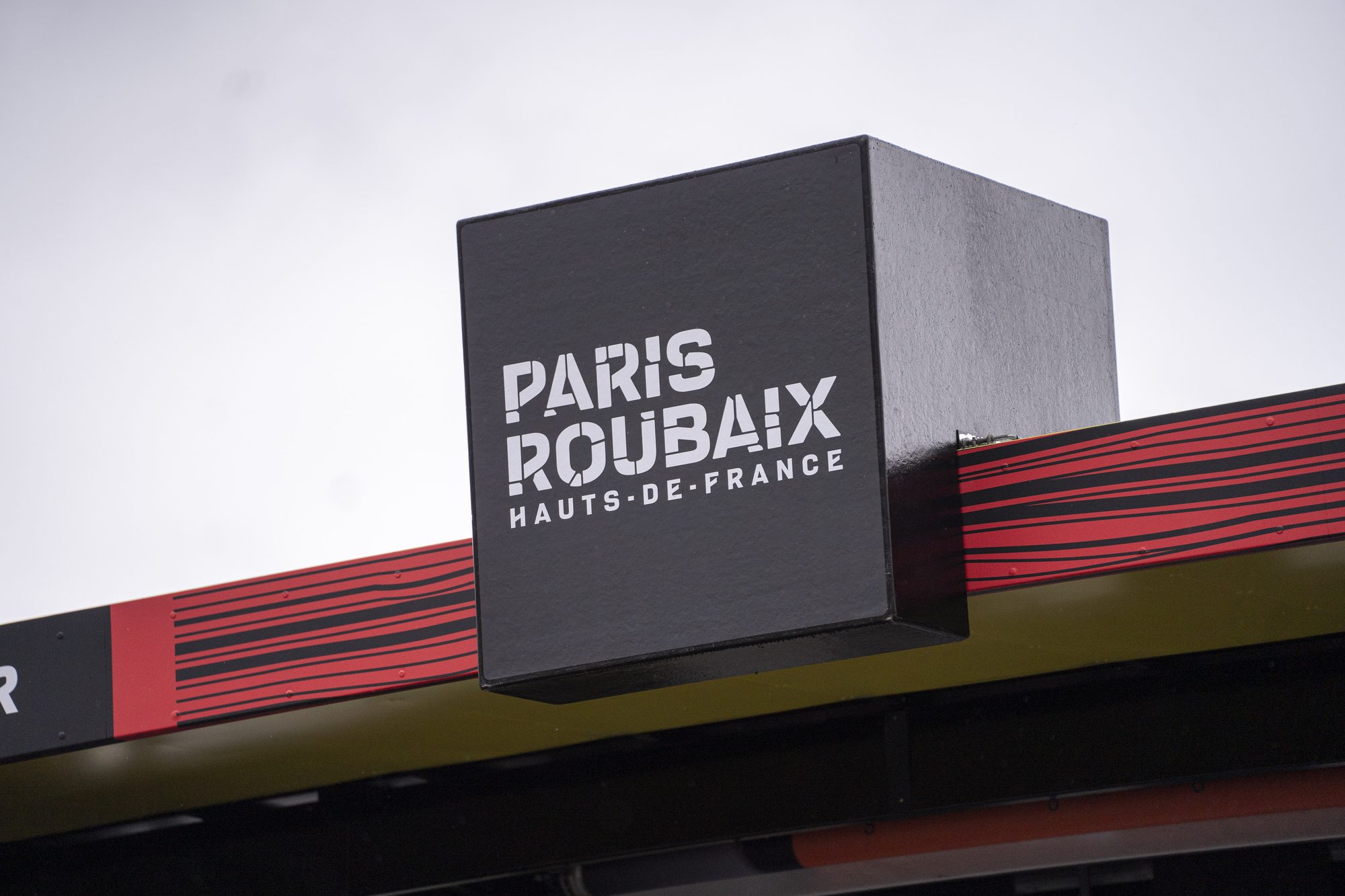
Some races you cover. Paris-Roubaix, you survive.
It's still the craziest race I've ever been part of. On the Thursday I drove up to Arras, near the start in Compiègne, and met the whole Shimano Neutral Service crew — the fleet of blue cars, the motorbikes, the mechanics who keep a race like this alive.
The first job was the recon: driving the route sector by sector to see the cobbles up close and shoot content around the neutral service, which matters more at Roubaix than almost anywhere else. I rode in Shimano Service Car 1 with a Paris-Roubaix winner as my driver — Servais Knaven — a man who knows exactly how to handle the pavé, on a bike and behind the wheel. Your first time on the cobbles of Roubaix is something you don't forget.
At some point I found myself hanging out of the boot, filming the motorbikes crossing the cobbles in slow motion. I could barely hold on — but that footage is still one of my favourite pieces I've ever shot.
One minute I was filming; the next I was hanging out of the boot, over the pavé.
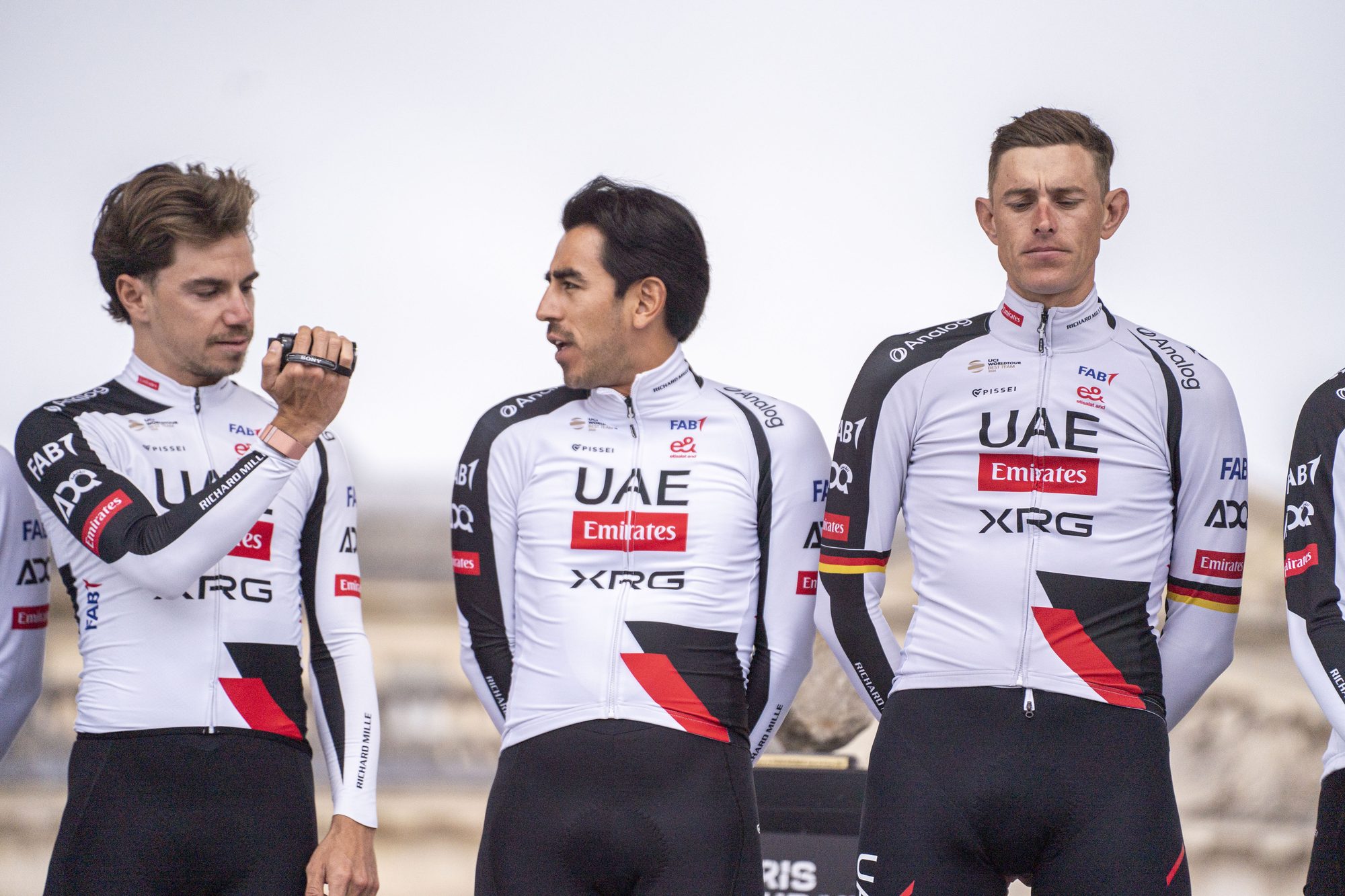
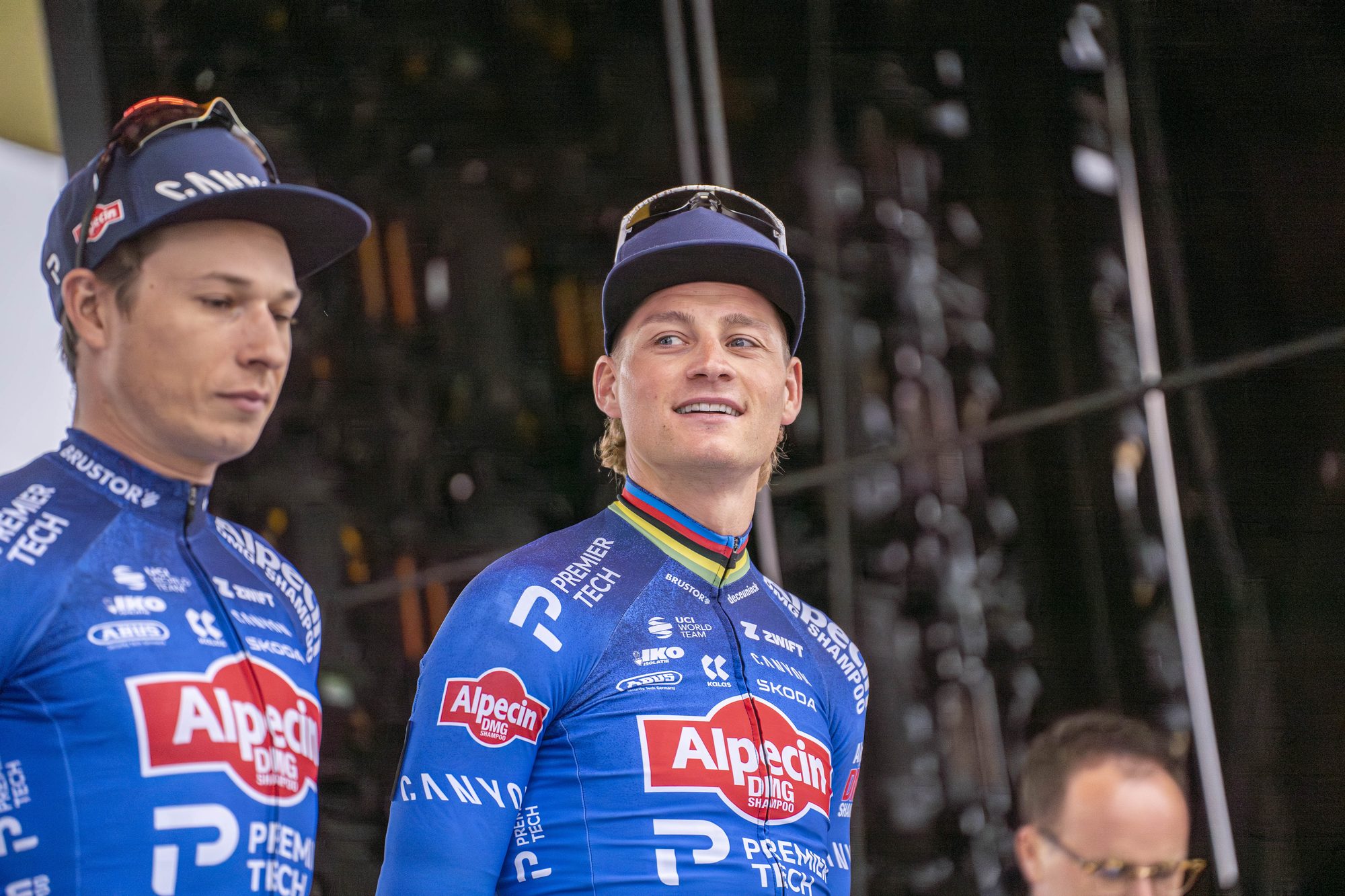
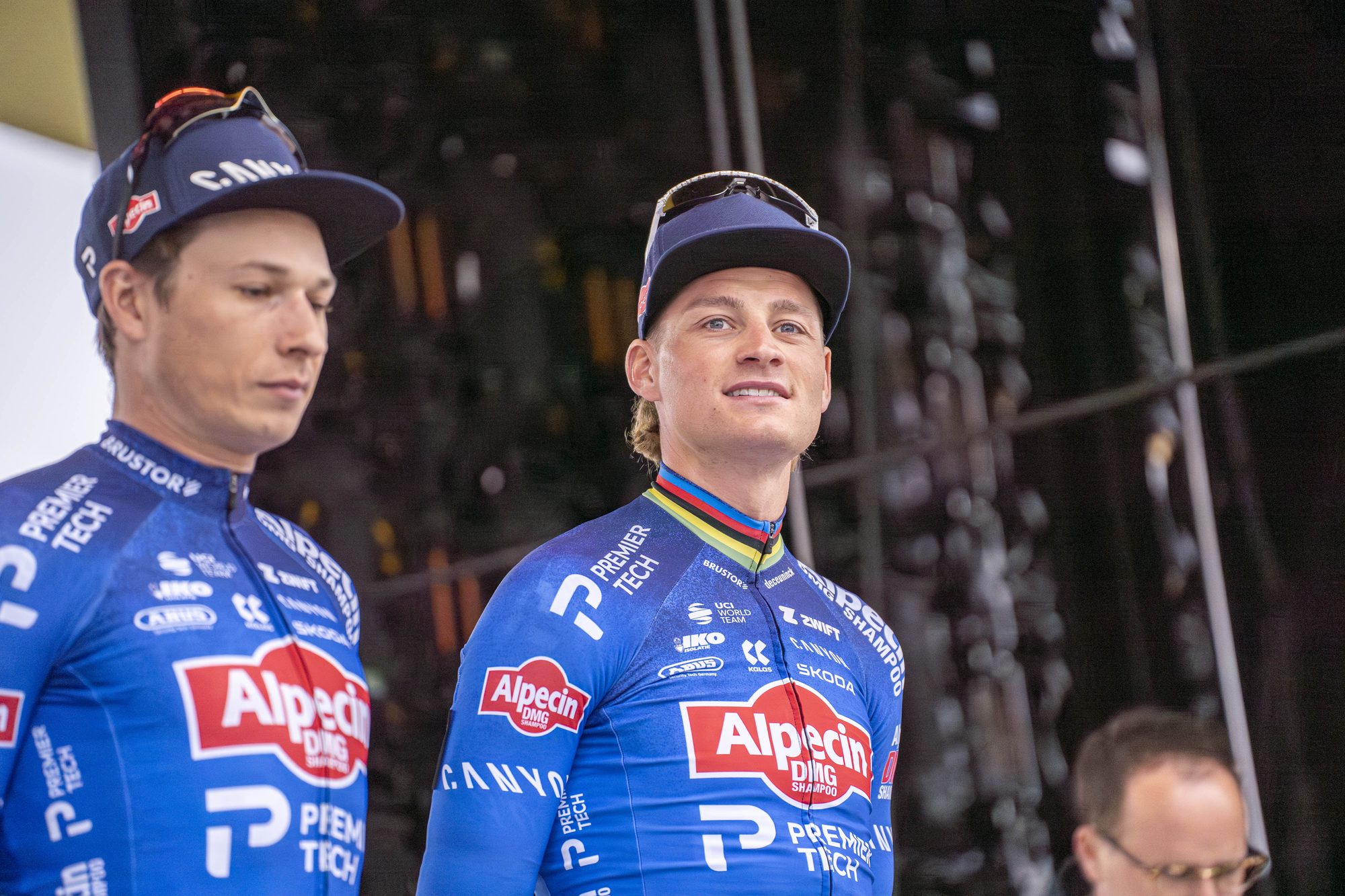
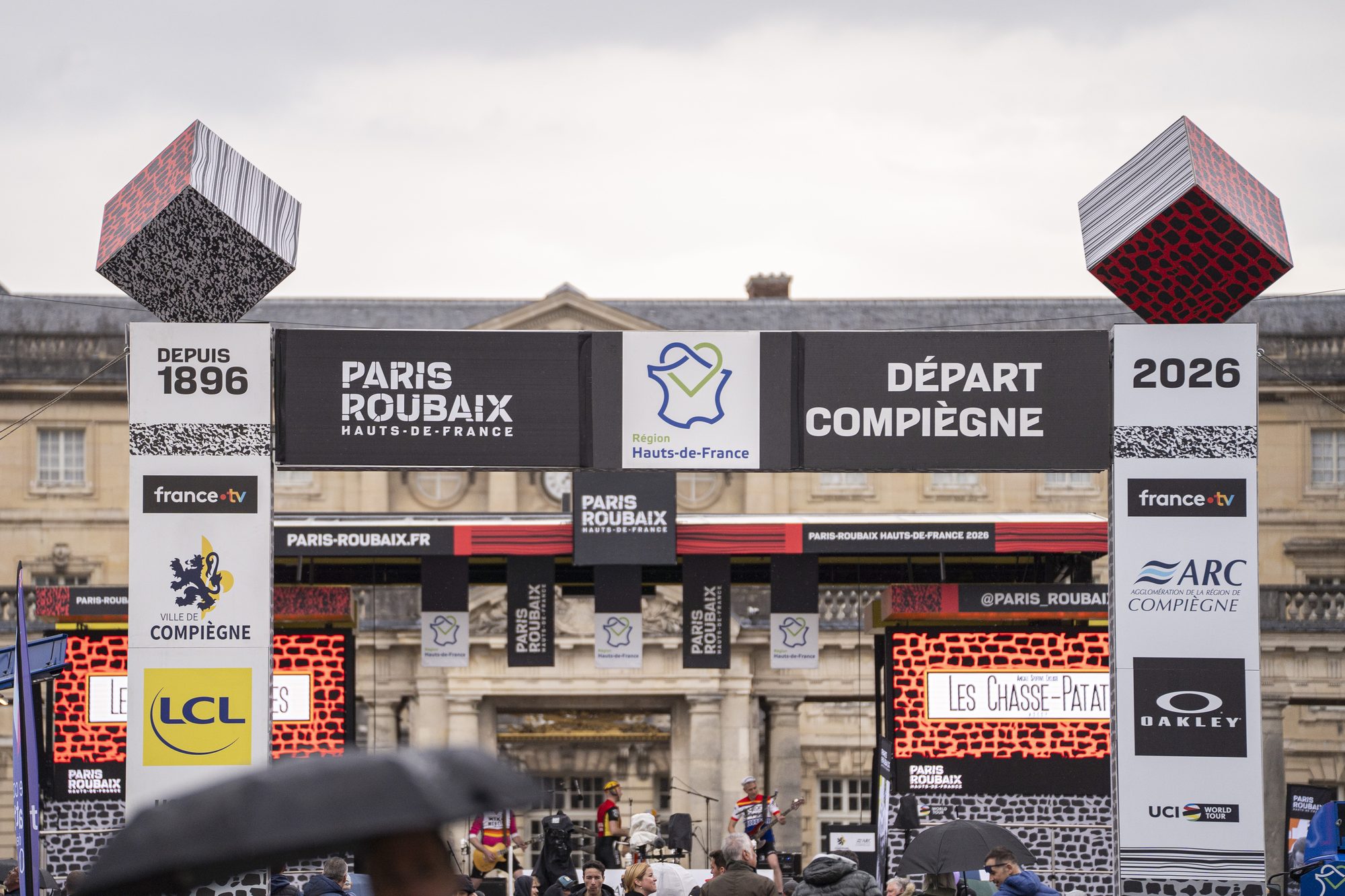
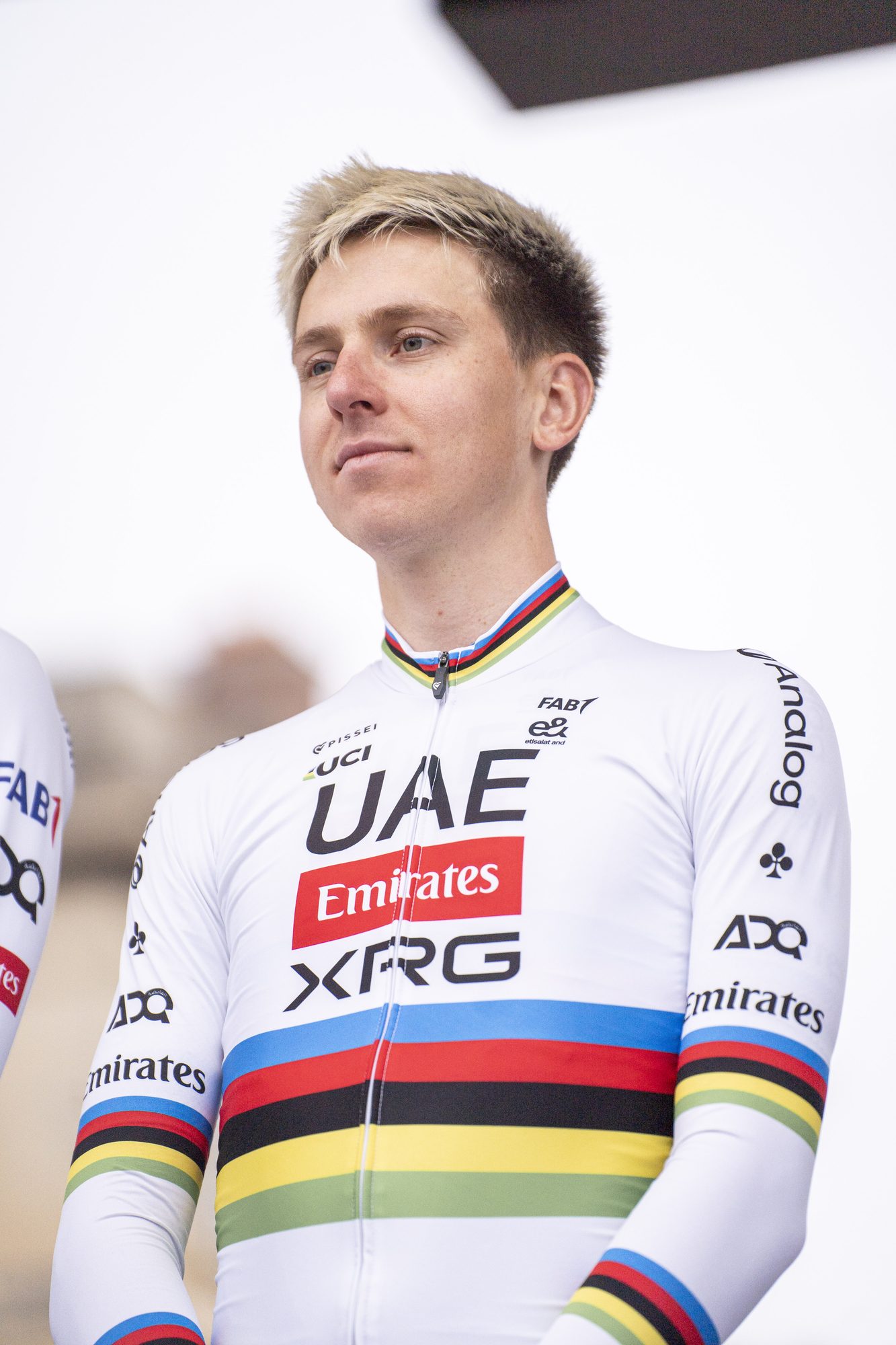
The next day was the team presentation in Compiègne, every squad rolling up onto the stage. I photographed and filmed the stars — Pogačar, Van Aert, Van der Poel, Mads Pedersen — which, as a cycling fan, is a huge thing on its own: to be that close to your idols and actually be there to work for them. It rained, of course, so the riders stayed in the buses and cars until the last moment and the crowd was enormous. We still got a team-presentation reel out of it that I love.
Race morning meant an alarm in the dark, bikes loaded onto the roofs of the Shimano cars, and off to the start. And then the part any cycling fan dreams about: climbing into Neutral Service Car 1 — the car that runs just ahead of the race and jumps in the second something goes wrong. At Roubaix, of all places.
For the first 160 kilometres, nothing. We drank an espresso in the car, ate, talked, listened to Radio Tour. Then the call came — get in behind the lead group — and everything switched to alarm mode. We chased onto the pavé behind the front of the race at 60, 70 km/h, which is an experience all of its own. And then: bang. A puncture — the car this time. We changed it right after the sector, and just like that our race was basically over after not even five minutes of action.
We collected Pogačar's neutral-service bike once UAE handed it back, and as our mechanic lifted that blue bike back onto the roof, I put my Meta glasses on him and filmed it — which turned into my most successful piece of content all year.
Flat fixed, we were dead last and had to claw our way back through the deviations. Then nothing again — until 20 kilometres to go, and the call everyone wants to hear: get behind the leaders, Pogačar and Van Aert. So we drove the final 20 km right behind Pogačar and Van Aert, all the way to the velodrome in Roubaix. That close to my idols, from the car, I made the photos of my life.
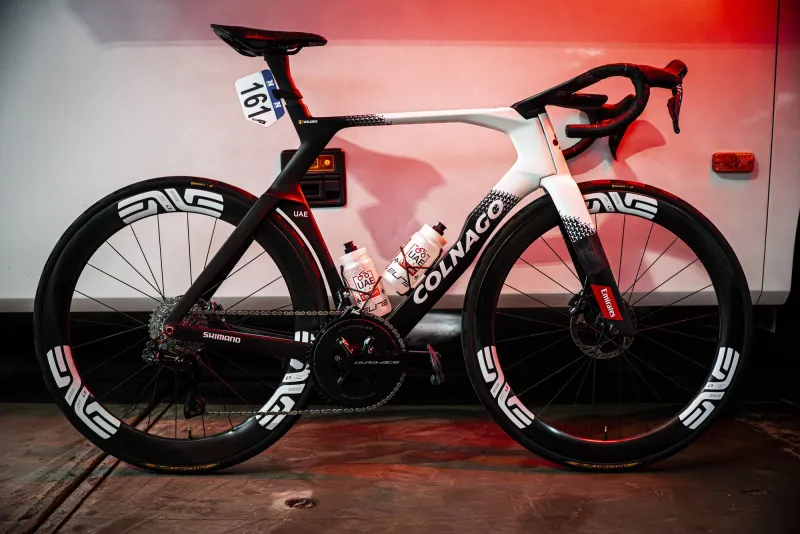
They dropped me at the velodrome, where I happened to run into our mechanic carrying Pogačar's broken Colnago Y1RS back to the team. That wrecked bike became my ticket in: I followed him through a crowd — a hundred, hundred-and-fifty people asking to photograph it — straight into the velodrome. I stood in the finish area and shot the riders coming in looking absolutely destroyed, the way only Roubaix leaves you, and cut a reel about the emotions at the line.
Driving home, I heard that Germany's Franzi Koch had won the women's Paris-Roubaix — a perfect ending to the day for a German cycling fan behind the camera.